Making your factory work as one piece by piece
Breaking down silos to create unified, efficient systems across your enterprise – from shop floor to top floor.
At Sull Systems, we specialise in connecting previously isolated subsystems into one unified framework that well structured shares data and functionality. Our integration solutions break down siloed infrastructure, enabling real-time information flow across your organisation and improving both productivity and decision-making.
What is System Integration?
System integration is the process of linking together different software and hardware subsystems to function as a coordinated whole.
Rather than replacing all legacy systems with one monolithic solution, we connect your existing systems so they work together effectively.
This approach bridges the gap between Operational Technology (OT) on the factory floor and Information Technology (IT) at the enterprise level, aligning your day-to-day operations with business objectives.
Our Approach
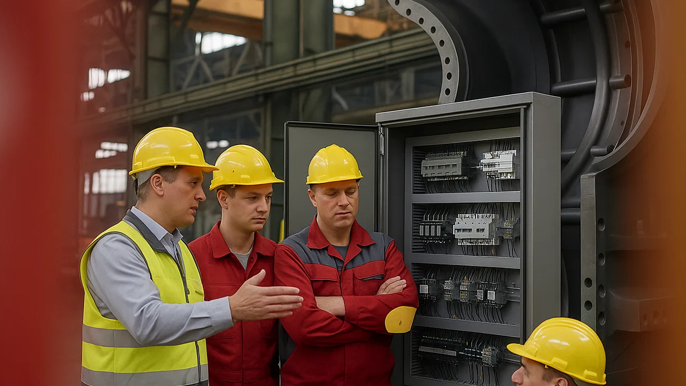
We take a practical, vendor-neutral approach to system integration that focuses on your specific business challenges. Our expertise spans the entire automation pyramid:
Enterprise systems (ERP, SCM, CRM)
Field devices (sensors, actuators, machines)
Control systems (PLCs, PACs, DCS)
Supervisory systems (SCADA/HMI)
Manufacturing operations management (MES/MOM)
Our Integration Services
Hardware-Software Integration
We connect your physical devices and machines with your software applications, creating a cohesive infrastructure where real-time data flows seamlessly between systems.
Real-time monitoring and control systems
PLC/DCS connectivity to higher-level systems
Machine data collection and historization
IoT sensor integration and edge computing
Horizontal Integration
We connect systems across your operations to streamline workflows and eliminate manual data transfer between departments.
Cross-plant data standardisation
Supply chain integration (WMS, TMS, inventory)
Quality management system integration
Asset management system connectivity
Legacy System Integration
We specialise in connecting older equipment and systems to your modern digital infrastructure without disruptive replacements.
Data extraction from proprietary systems
Protocol conversion for legacy equipment
Retrofitting sensors to older machines
Legacy software API development
Vertical Integration (OT/IT)
We bridge the gap between shop-floor equipment and enterprise systems, enabling data to flow from sensors to boardroom dashboards.
Production order and schedule synchronisation
SCADA to MES/ERP integration
Production data to business system connectivity
Real-time KPI tracking and reporting
Flexibility
We implement modern cloud-based integration platforms that connect your operations to advanced analytics and services.
Remote monitoring and management
Industrial IoT platform implementation
Edge-to-cloud architecture design
Cloud-based data lakes and analytics
Secure Integration Design
We implement integration solutions with cybersecurity as a foundation, not an afterthought.
Security monitoring and incident response
Secure OT/IT network architecture
Authentication and authorisation frameworks
Encrypted data transfer solutions
Business Benefits of System Integration
Improved Efficiency: Eliminate redundant data entry, automate workflows, and streamline operations through unified systems. Our clients typically see productivity increases of 15-30% after implementing proper integration solutions.
Data Transparency: Gain real-time visibility across your entire operation. Connect production, quality, maintenance, and business data for a complete picture that enables better decision-making at all levels of your organisation.
Enhanced Quality & Traceability: Track every product through its entire lifecycle with integrated quality checks and genealogy tracking. Quickly trace any issues to root causes and implement targeted solutions.
Reduced Downtime: Identify and address issues before they cause failures. Integration enables predictive maintenance and faster troubleshooting by connecting machine data with maintenance systems.
Our Technology Expertise
Integration Methods
OPC UA: Open Platform Communications Unified Architecture for secure, reliable data exchange
Middleware & ESB: Enterprise Service Bus solutions for complex integration
Standard Protocols: Implementation of industrial protocols (Modbus, PROFINET, EtherNet/IP, etc.)
Platform Experience
PLC/DCS: Siemens, Allen-Bradley, Omron, Schneider Electric, Mitsubishi, DeltaV, Modicon,
SCADA: Ignition, Wonderware, WinCC, FactoryTalk
Databases: SQL, NoSQL, time-series, and historian databases
Recipe Management Systems
Our recipe management solutions enable efficient creation, storage, and execution of manufacturing recipes:
User-friendly Recipe editors for process engineers
Secure Recipe storage with version control and audit trails
Recipe approval workflows with electronic signatures
Parameter scaling for different batch sizes
Recipe transfer between development and production environments
Support for master recipes, site recipes, and control recipes
Integration Services
We specialise in integrating batch systems with your broader manufacturing environment:
Connection to ERP systems for production scheduling
Integration with MES for production tracking and reporting
Material management and inventory control interfaces
Historian databases for long-term data storage and analysis
Clean-in-Place (CIP) system integration for automated cleaning cycles
Industry Specific Implementations
Our development team implements robust CIP communication in your control systems
Configuration of implicit I/O connections for real-time data exchange
Development of explicit messaging routines for parameter access
Implementation of producer/consumer data models
Custom function blocks for Siemens PLCs to interface with CIP networks
Industries We Serve
Manufacturing: From discrete to process manufacturing, we integrate machine controllers, assembly robots, and sensors with supervisory systems (SCADA/HMI) and Manufacturing Execution Systems (MES), which in turn connect to Enterprise Resource Planning (ERP) for a vertically integrated production process.
Energy & Utilities: We integrate SCADA systems for power generation plants, electric grids, and oil & gas operations with enterprise systems to optimise decision-making for load balancing, maintenance.
Logistics & Supply Chain: We connect Warehouse Management Systems (WMS), Transportation Management Systems (TMS), inventory management, and order systems with physical technologies like barcode/RFID scanners and automated equipment for complete supply chain visibility.
Food & Beverage: We specialise in batch control, CIP system integration, quality assurance connectivity, and traceability solutions that meet industry regulations while optimising production processes.
Technology Platforms
We work with all major batch control platforms to deliver the right solution for your specific needs:
Siemens (SIMATIC)
S7 series (S7-1200, S7-1500, S7-300, S7-400)
TIA Portal programming software
Mitsubishi Electric
MELSEC series (iQ-R, iQ-F, Q, L, FX)
GX Works programming software
ABB
AC500 series
Automation Builder programming software
Allen-Bradley (Rockwell Automation)
ControlLogix, CompactLogix, MicroLogix
Studio 5000 and RSLogix programming software
Omron
CJ, CP, CS, and NX/NJ series
Sysmac Studio programming software
Delta
DVP and AH series
ISPSoft programming software
Mitsubishi Electric
MELSEC series (iQ-R, iQ-F, Q, L, FX)
GX Works programming software
As an independent systems integrator, we select the platform that best fits your requirements, existing infrastructure, and long-term strategy. Our expertise spans all major vendors, allowing us to provide objective recommendations.
Our Implementation Approach
1. Assessment & Planning
We begin by thoroughly understanding your current systems, business requirements, and integration goals. This phase includes technical assessment, gap analysis, and development of an integration strategy that aligns with your business objectives.

2. Solution Design
Our engineers create a detailed integration architecture including data flow diagrams, interface specifications, and technology selections. We emphasise standardised, scalable designs that avoid vendor lock-in and support future expansion.
3. Implementation
We develop, configure, and test each integration point, ensuring secure and reliable data exchange between systems. Our implementation process minimises disruption to your ongoing operations while establishing the new connections.
4. Validation & Training
We rigorously validate the integrated system against your requirements and provide comprehensive training to your team. This ensures both technical success and organisational adoption of the new capabilities.
Why Choose Sull Systems?
PLC Integration Expertise: Our engineers are certified specialists in all major PLC platforms including Allen-Bradley, Siemens, Schneider, and Mitsubishi.
Multi-Platform Knowledge: We work with diverse automation systems and can recommend the best solution for your specific industrial application needs.
Industry Experience: We understand the unique requirements of manufacturing, energy, water treatment, and pharmaceutical control systems.
Full-Service Approach: From initial concept and design through implementation, commissioning, and ongoing technical support.
Standards Compliance: We implement systems that meet IEC 61131, ISA-95, and other critical industry standards for automation integration.
Scalable Solutions: Our systems grow with your business, from single-controller applications to plant-wide integrated control networks.

 Welcome To Sull Systems